
What Is NHL?
Non-Hodgkin lymphoma (NHL) refers to a group of closely related types of lymphomas that have some common characteristics.1,2  Lymphoma is a type of cancer that arises from within the lymphatic system (the body’s immune system) and is made up of tissues and organs that help in fighting off infections and certain diseases.3,4 These tissues and organs include the tonsils, thymus, spleen, bone marrow, lymph vessels, and lymph nodes.2 Lymph tissue is also found in many other parts of the body, including the small intestine.2 Descriptions of each element of the lymphatic system are listed below:

Lymphocytes
A type of white blood cell, which fights infection and disease. There are three types of lymphocytes – B cells, T-cells, and natural killer (NK) cells. Most NHL types originate from B-cells.2

Lymph nodes
Small, bean-shaped structures which contain the body’s immune cells, including lymphocytes. They can be found inside the chest, abdomen, and pelvis. Various sites are connected via a network of lymphatic vessels (green vessels in the figure) making up the lymphatic system.1,2

Spleen
An organ located in the abdomen that produces various immune system cells, such as lymphocytes. It also stores healthy blood cells and helps to filter out damaged blood cells as well as foreign and bodily waste. The spleen lies under the lower ribs on the left side of the body.1,2

Bone marrow
A spongy tissue contained inside certain bones where new blood cells are produced.1,2

Thymus
An organ located behind the upper part of the breastbone and in front of the heart; it is essential in the development of one type of lymphocytes called T-lymphocytes.1,2

Adenoids & Tonsils
These are masses of lymph tissue located at the back of the throat, which help fight germs that are breathed in or swallowed.1,2

Digestive tract
Various parts of the digestive tract have lymph tissue including the stomach and intestine.1,2
Types of non-Hodgkin lymphoma
NHL can be categorized in different types based on factors, such as type of lymphocyte it developed from, as well as how it grows and spreads.2 These factors can affect experienced symptoms, time to diagnosis, possible treatment options, and overall survival.2 Affected lymph nodes located next to each other, and NHL that is new or that has returned after treatment (recurrent) can impact treatment as well.2
Lymphoma based on cell type
While NHL can occur in any of the lymphocyte cell types, B-cell lymphomas comprise about 85% of NHLs. B-cells fight infections by producing antibodies.3 The focus of this site is B-cell lymphomas.
Lymphoma based on growth and spread
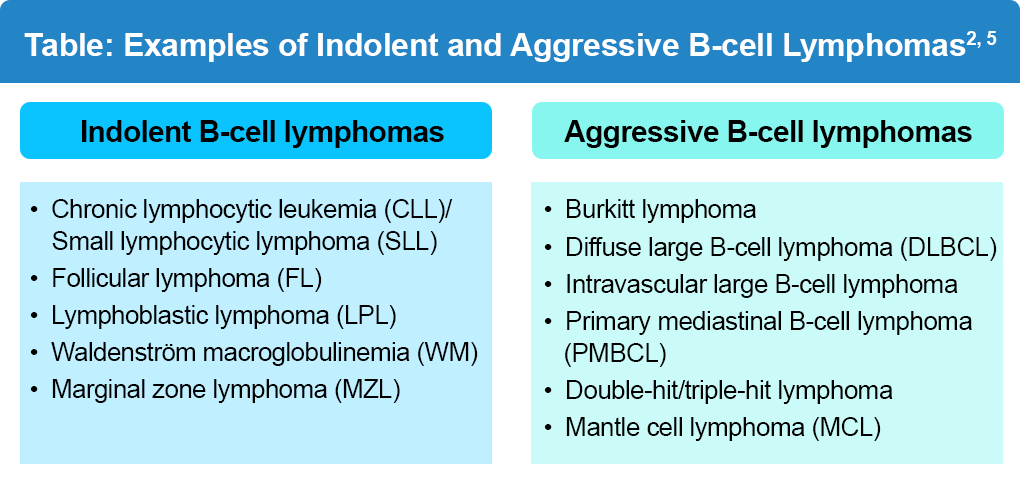
NHLs are also classified as indolent, meaning it grows and spreads slowly, or aggressive, meaning it grows and spreads quickly. Indolent lymphomas may have few signs or symptoms, whereas symptoms may be severe with aggressive types.2 And while both types are equally common among adults, children are more prone to aggressive NHL.2 Some types of NHL have both indolent and aggressive characteristics, for example, mantle cell lymphoma.1
Indolent lymphomas, while typically not curable, are treatable, and patients with these types of NHL can live long lives while in remission. If NHL is recurrent, lymphomas initially determined as indolent may return as aggressive, and vice versa.2 Aggressive lymphomas are often curable.1
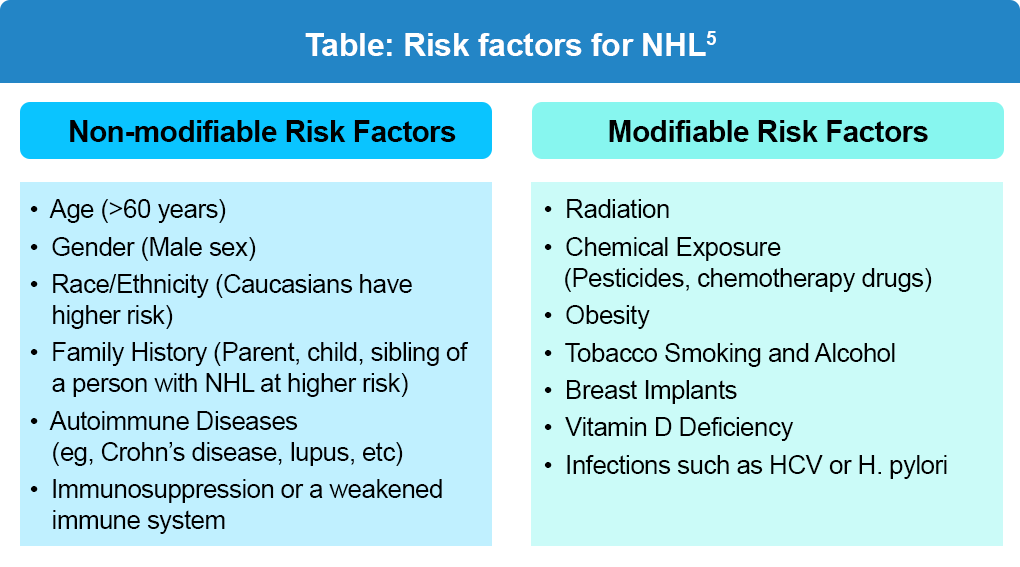
Who is at risk for developing NHL?
References
- American Cancer Society. What is Non-Hodgkin Lymphoma? Last revised January 16, 2025. (https://www.cancer.org/cancer/types/non-hodgkin-lymphoma/about/what-is-non-hodgkin-lymphoma.html).
- PDQ Adult Treatment Editorial Board. Non-Hodgkin’s Lymphoma Treatment (PDQ®): Patient Version. In: PDQ Cancer Information Summaries. National Cancer Institute. August 22, 2024. (https://www.ncbi.nlm.nih.gov/books/NBK65899/).
- Lymphoma Research Foundation. Non-Hodgkin Lymphoma. (https://lymphoma.org/understanding-lymphoma/aboutlymphoma/nhl/).
- Mayo Clinic. Lymphoma. (https://www.mayoclinic.org/diseases-conditions/lymphoma/symptoms-causes/syc-20352638).
- Lymphoma Research Foundation. Understanding Lymphoma and Chronic Lymphocytic Leukemia (CLL). Non-Hodgkin Lymphoma (Lymphoid Neoplasms). Last updated May 2024. (https://lymphoma.org/wp-content/uploads/2024/10/Non_Hodgkin_Lymphoma_Fact_Sheet_2024.pdf).
ALL URLs accessed October 28, 2025